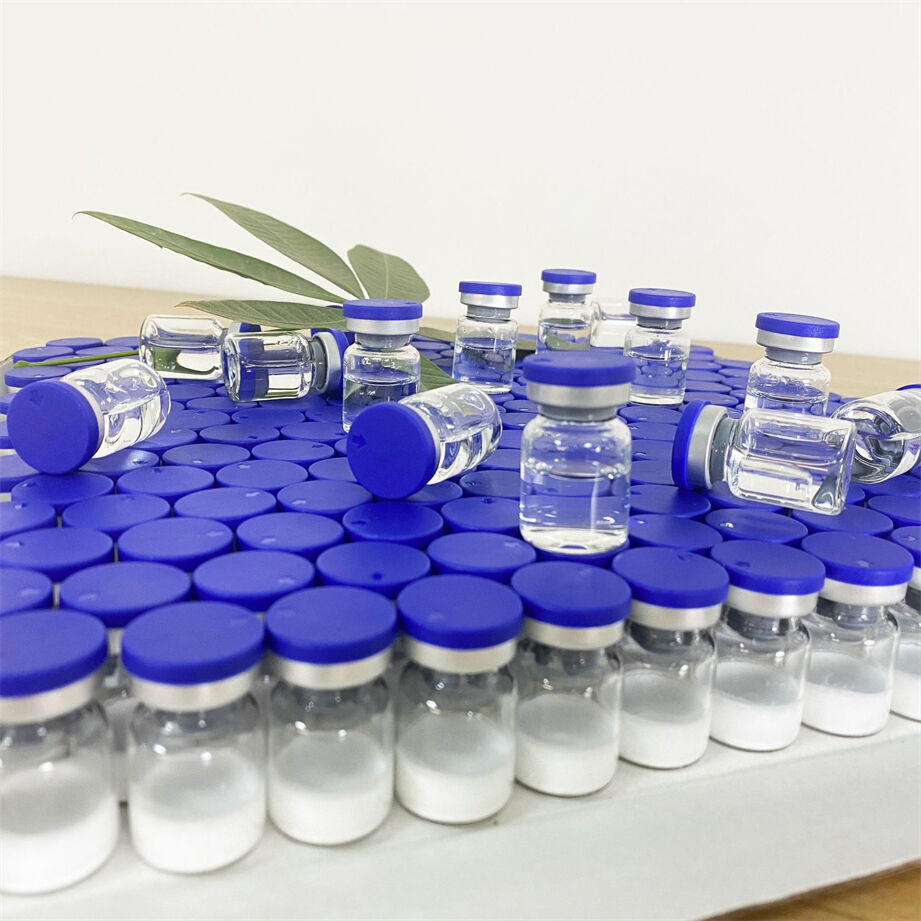
How Hplc Is Used To Inspect Peptide Purity
Hplc & Mass Spectrometry Testing For Peptides: Making Sure Purity, Accuracy, And Research Study Confidence High Performance Liquid Chromatography ( Visit this link HPLC) approach development, recognition, and analysis is one of one of the most commonly made use of techniques for drug screening in formulations and biological fluids. Purity is calculated by separating the main optimal location by the overall incorporated area of all UV-absorbing optimals. Regular setups for baseline, assimilation, flow rate, and slope conditions are critical for equivalent data. William is a study expert at Peptides Laboratory UK, being experts in research peptides, lab compounds, and sourcing requirements for high-purity peptide items. Peptides are delicate and can quickly come to be jeopardized if you aren't careful. This is why logical screening throughout formula growth is so essential. All these voices collaborating, the report that winds up in your hands is not simply a heap of chromatograms. We produce the credibility that lets those numbers travel undoubted completely from your bench to the patient's bedside. Scientists, labs, and research companies all count on dependable data, which begins with understanding that the peptide in the vial is precisely what it's intended to be. That's where HPLC (High-Performance Fluid Chromatography) and MS (Mass Spectrometry) screening can be found in. These 2 gold-standard techniques are the foundation of modern lab analysis, ensuring peptides are pure, properly determined, and all set for trusted experiments. As a UK Peptides Business, high quality confirmation is not just an insurance claim; it's a system constructed for transparency, clinical precision, and trust fund. Inside the column are microscopic particles that quickly "get hold of onto" different materials in the sample. Our newest effective research was a critical bioequivalence research study, where samples from a cross-over research with about 100 volunteers required swift evaluation. Join over 5,000 active participants and get updates on new kid on the blocks and newest laboratory records. These techniques are extremely sensitive, allowing them to spot also trace amounts of impurities. Levels of air-borne fragment pollutants are determined by monitoring the existence of number of particles to follow federal typical 209E which needs 1 cfm for air-borne particulate sanitation. Met One Fragment Counter model 237A is used to figure out the fragment counts in the laboratory. For peptides, pollutant expectations adhere to a risk-based FDA technique, as opposed to the small-molecule thresholds in ICH Q3A/Q3B (which leave out peptides). Peptide-related impurities existing at low-percent degrees (e.g., around 0.1% and over) normally need characterization, and higher-level or new contaminations might need boosted justification because of potential immunogenicity problems. FDA guidance and ICH Q2( R1) help specify needs for logical approach recognition and impurity analysis for peptide medication items. Pharma companies looking to develop peptide-based medicines require a strong QC screening program. This is very important because it permits them to meet governing expectations and get approval for peptide drugs.
- Material is provided as a lyophilized recommendation compound with HPLC pureness verification.
- These days, they are likewise being discovered for cancer cells treatment because they can target particular cells and pathways in the body.
- Reach out today and learn just how we can aid you bring risk-free, effective peptide therapies to market.
- The chromatogram is the most essential visual data aspect on an HPLC peptide examination record.
- Third-party screening removes this prejudice by presenting an exterior entity without monetary risk in positive outcomes.
What Are The Major Elements Of Hplc Technique Validation?
They are not planned for human intake, therapeutic use, or any kind of form of self-administration. Any referrals to research findings, clinical studies, or possible applications are provided exclusively to notify the scientific community and do not constitute medical insurance claims. Mass spectrometry gives molecular-level verification that the major chromatographic peak matches the anticipated peptide mass. Batch-specific screening indicates that every production run goes through independent evaluation as opposed to depending on historic screening from previous batches. Each set receives an one-of-a-kind identifier that links it to details COA outcomes.Signed Up And Checked By Various Regulatory Companies
When a brand-new peptide set comes with a Certificate of Analysis, Click for source researchers make sure there is a single primary optimal in the HPLC output and a high purity percent. If the peptide is, say, 98% pure by HPLC, they wage confidence; if the HPLC reveals numerous large pollutant peaks or purity listed below ~ 90-- 95%, they might turn down or further purify that batch. The retention time of the main top is additionally compared to expectations or previous sets as an additional identity check. By using just HPLC-verified peptides, scientists reduce the threat of confounding variables in their assays. As an example, a peptide at 90% purity versus one at 99% pureness can produce divergent organic outcomes. In COA review, it generally consists of HPLC purity screening, mass spectrometry identification verification, and batch-specific documentation showing the checked great deal, approach, results, and date. HPLC is outstanding at responding to the concern "just how pure is this example by chromatographic area percent? A sample can create a clean-looking chromatogram with one dominant top and still be the incorrect compound if identification was never verified. HPLC measures separation and family member peak location; mass spectrometry procedures mass-to-charge habits that can be utilized to validate molecular identity. Peptide testing is the set of logical checks used to evaluate a peptide sample prior to it is utilized in a research study operations.Just how much does peptide HPLC screening cost?
The price of peptide analysis service varies substantially based upon which methods your regulatory package calls for: HPLC-UV Evaluation: $& #x 24; 300 & #x 2013; & #x 24; 800 per example (common purity evaluation) LC-MS (Fluid Chromatography-Mass Spectrometry): $& #x 24; 600 & #x 2013; & #x 24; 1,500 per sample (molecular weight confirmation).